
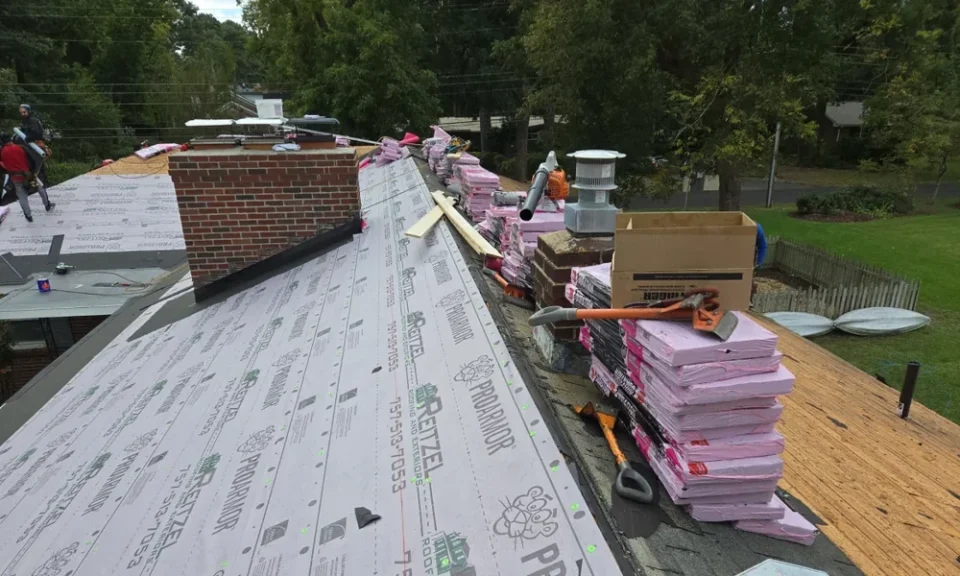
Roofs across Hampton Roads take a beating that inland roofs rarely see. Salt air drifts in off the Atlantic and the Chesapeake Bay, humidity hangs on for months, and the stretch from June through November brings tropical systems while nor’easters push rain sideways well into winter. For decades, plenty of local roofs were installed the same way they would be in a dry inland suburb. That approach is fading fast, and the gap between an older style reroof and a current one shows up in how long the roof lasts and how it behaves when a storm stalls over Norfolk or Virginia Beach.
Homeowners trying to land on the right side of that gap often turn to WT Anderson Roofing & Siding, a family-owned Class A contractor that has worked out of Norfolk, Virginia Beach and Chesapeake for more than 20 years. Their crews handle leak detection, flashing and decking repair and emergency calls, plus full replacements in GAF, Owens Corning and CertainTeed shingles, TPO and EPDM flat roofs and coatings for businesses, gutters, windows, and vinyl siding planned through a 3D design consultation. If your roof is starting to show its age, a free estimate from a crew that knows Tidewater weather is an easy first step.
What Changed Along the Coast
Three forces pushed roofing forward here. Materials improved, insurers began paying closer attention to how roofs hold up in wind, and the code kept tightening. Virginia builds under one statewide code based on the national model codes, and the current edition of Virginia’s Uniform Statewide Building Code now governs new work across every Hampton Roads city. Most local building departments treat a full reroof as permit work, while a handful of replaced shingles usually is not. The pairings below show where the old habits and the current practice part ways.
Layering Over Versus Stripping to the Deck
Old way: A second layer of shingles nailed straight over the first. It skipped disposal fees and shaved a day off the job.
New way: A full tear-off down to bare sheathing. The residential code already blocks a new layer over two existing ones, but the bigger reason is moisture. In a humid coastal climate, an overlay hides soft plywood, rusted nails and old leak stains. Stripping the roof lets the crew replace bad decking sheet by sheet before anything new goes down, and it gives the fresh shingles a flat surface to seal against.
Felt Paper Versus Synthetic Underlayment
Old way: Fifteen pound asphalt felt rolled across the deck. Felt soaks up moisture, wrinkles on muggy mornings and tears loose when wind gets under it during installation.
New way: Synthetic underlayment that stays flat, sheds water and holds up if a storm rolls through before the shingles are on. The self-adhered membrane goes into valleys, around vents and pipes, and along eaves on lower slopes, where wind-driven rain is most likely to back up under the shingles.
Bare Deck Seams Versus a Sealed Roof Deck
Old way: Plywood joints left open beneath the underlayment. When a hurricane peeled off shingles and felt, water poured straight through those gaps into the attic.
New way: Taping every deck seam or covering the whole deck with a self-adhered layer. The idea comes from wind research by the Insurance Institute for Business and Home Safety, and it changes the outcome of a bad storm. A roof that loses shingles can still keep the attic and ceilings mostly dry until repairs are made.
Four Nails Versus a High-Wind Pattern
Old way: Four nails per shingle, sometimes staples, often driven too high above the manufacturer’s nailing line.
New way: Six nails placed squarely in the nailing strip, using shingles rated for high wind under ASTM D7158, where Class H is the top rating. Near salt water, corrosion-resistant fasteners matter just as much as the count. Adhesive starter strips at eaves and rakes keep the first course from lifting, and metal drip edge, which the residential code now requires, protects the deck edges from runoff.
Scattered Vents Versus Balanced Airflow
Old way: A few box vents or a gable vent, with soffit vents painted shut or buried under attic insulation.
New way: Intake at the soffits matched to exhaust at the ridge. The code sets a minimum net vent area of 1/150 of the attic floor, which can drop to 1/300 when intake and exhaust are properly balanced. In a Tidewater summer, a well-vented attic runs cooler, sheds the moisture that condenses on the underside of the deck, and keeps shingles from baking early. Mixing exhaust types on one roof is a mistake crews now avoid, because a powered fan or box vent can pull air from the ridge vent instead of the soffits.
Caulked Joints Versus Layered Metal Flashing
Old way: A bead of sealant where the roof meets a chimney or wall, reapplied every few years as it cracked in the sun.
New way: Step flashing woven into each shingle course and tucked behind the siding, counterflashing cut into masonry, and a kickout flashing where a roof edge runs into a wall. That last piece, also required by code, steers water into the gutter instead of down the siding. It is also why roof and siding work on coastal homes increasingly gets planned together rather than by separate crews on separate schedules.
Pressure Washing Versus Algae-Resistant Granules
Old way: Living with the dark streaks that spread across north-facing slopes, then blasting them off with a pressure washer that stripped granules along with the stains.
New way: Shingles made with copper-treated granules that resist the algae behind those streaks, which thrives in Hampton Roads humidity. When cleaning is needed, a low-pressure soft wash removes growth without shortening the roof’s life.
The Shift at a Glance
| Roof component | Habit that used to be common | Current coastal practice | Main threat it answers |
|---|---|---|---|
| Existing shingles | Second layer laid on top | Full tear-off to sheathing | Hidden rot and trapped moisture |
| Underlayment | Asphalt felt | Synthetic plus self-adhered membrane at weak spots | Wind-driven rain |
| Deck seams | Left open | Taped or fully covered | Water entry after shingle loss |
| Fastening | Four nails or staples | Six nails, corrosion-resistant, wind-rated shingles | Hurricane and nor’easter gusts |
| Ventilation | Random box vents | Balanced soffit intake and ridge exhaust | Attic heat and condensation |
| Flashing | Caulk at walls and chimneys | Step, counter and kickout flashing | Leaks at roof-to-wall joints |
| Shingle surface | Standard granules | Algae-resistant copper granules | Black streaking in humid air |
Reading a Quote With These Pairings in Mind
A written estimate tells you which approach you are actually buying. Look for the words tear-off and decking allowance, the underlayment type by name, the nailing pattern and the shingle’s wind rating. A solid quote also spells out ventilation changes, replacing flashing and who pulls the permit. Before signing, it is worth confirming the contractor’s license class and status through Virginia’s contractor license lookup, since the class limits how large a job a company can legally take on. A roof put together the newer way costs a little more on day one, yet along this stretch of coast it is the version far more likely to stay put, stay dry and still look sharp when the next big storm season arrives.
