
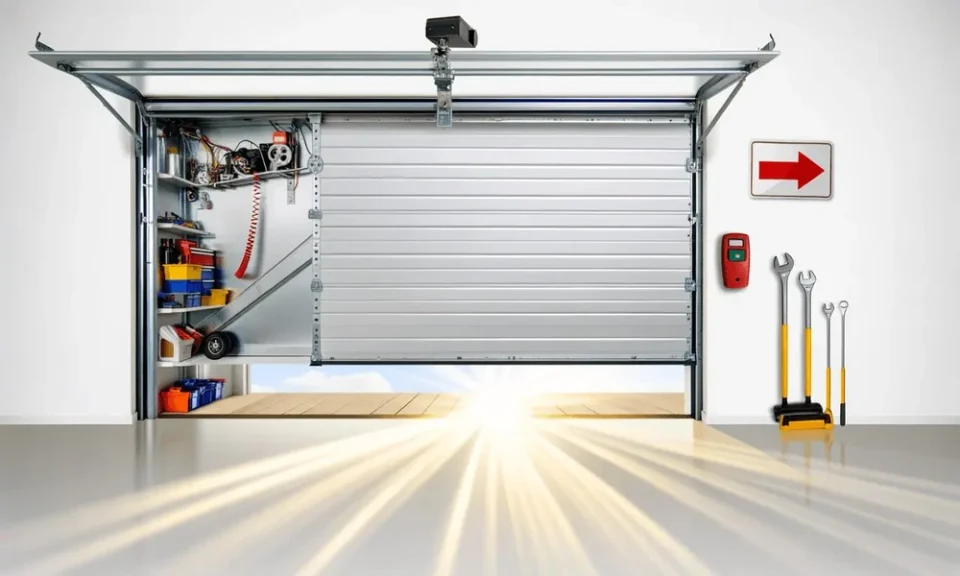
When choosing industrial garage doors and openers, every detail matters. The right combination impacts not just security, but workflow, energy costs, and long-term reliability. Whether your facility is a warehouse, manufacturing plant, or distribution hub, ignoring critical features can lead to expensive regrets.
Industrial Garage Doors: Types and Material Comparison
Steel and aluminum stand as the most common choices for industrial doors, each offering distinct advantages. Steel doors command respect for their durability, impact resistance, and sound-blocking capabilities. The trade-off is weight, installation usually requires robust mounting hardware and professional expertise. Aluminum, by contrast, is lighter and less prone to corrosion, making it suitable for humid or chemical-intensive environments. However, it typically sacrifices some security and insulation.
| Feature | Steel Doors | Aluminum Doors |
|—————–|—————|—————|
| Durability | High | Moderate |
| Weight | Heavy | Light |
| Corrosion | Moderate | Low |
| Insulation | High (with foam) | Low-Moderate |
| Maintenance | Moderate | Low |
Beyond material, the door type shapes performance. Rolling steel doors save space and withstand frequent cycles, ideal for busy operations. Sectional doors, which fold overhead, offer better insulation and design flexibility but require more overhead clearance. Specialized solutions like high-speed soft doors reduce energy loss while promoting hygiene in food or pharmaceutical plants. Strip curtains and air curtains can support workflow by separating climate zones while allowing frequent passage.
Operating Mechanisms: Manual vs. Electric Openers
Manual doors hold appeal for smaller facilities or as contingency options during power outages. Yet, the rise of electric openers has brought significant productivity gains and improved safety.
Chain drive openers remain the rugged workhorse, prized for lifting heavy doors reliably, though noise and vibration are drawbacks. Belt drive systems run smoother and quieter, a plus for environments sensitive to noise, but may not handle heavy loads as effectively. Screw drive openers require less maintenance as they have fewer moving parts, but can struggle in very cold temperatures.
Control has evolved as well. Wired, wall-mounted buttons are still common, yet wireless remotes and now smart controls offer remote monitoring and scheduling. Facilities can now integrate garage access with building management systems or mobile devices. Backup power options, such as battery systems or manual override, are essential for ensuring access during emergencies.
Safety and Security Features: Essential Considerations
Safety features have become non-negotiable. Sensors detect obstructions, triggering auto-reverse to prevent injury or equipment damage. Security grilles and robust locking systems deter unauthorized entry, while integrated alarm systems can be connected to facility-wide security networks. Compliance with safety standards, such as OSHA or ANSI, must always be verified for industrial installations.
Environmental and Energy Efficiency Factors
Energy efficiency is a hidden cost-saver in industrial doors. High-quality insulation (measured by R-value) reduces heat loss, crucial for climate-controlled operations.
| Insulation Type | Typical R-Value | Use Case |
|———————|—————–|————————-|
| Polyurethane Foam | 12-18 | Maximum thermal control |
| Polystyrene Panels | 6-10 | Moderate insulation |
| Uninsulated | 0-2 | Non-temp-sensitive use |
Weather sealing blocks drafts, dust, and moisture. Integration with HVAC systems and air curtains further locks in efficiency, keeping internal conditions stable and energy bills in check.
Installation and Maintenance: Service Models Compared
Entrusting installation to certified professionals reduces the risk of costly mistakes. DIY attempts can void warranties or jeopardize safety. Ongoing preventive maintenance, regular inspections, lubrication, and adjustments, beats the headache of reactive repairs that halt operations.
Some providers, like Door Doctor, offer 24/7 emergency services and tailored maintenance programs. Fast response times keep downtime minimal if issues do arise.
Cost Analysis: Upfront vs. Long-Term Investment
Initial purchase and installation costs can vary widely based on door type, materials, and opener sophistication. However, energy-efficient doors and reliable openers can pay for themselves over time by lowering ongoing maintenance and utility bills.
| Cost Factor | Short-Term Impact | Long-Term Impact |
|—————————–|——————-|————————-|
| Purchase/Installation | High | One-time expense |
| Energy Consumption | Ongoing | Lower with insulation |
| Maintenance & Repairs | Moderate | Lower with quality door |
| Emergency Service | Occasional | Lower with prevention |
Balance your budget against required features. Sometimes, investing more up front means spending far less over the years.
Customization and Design Options
Aesthetics do not take a back seat in industrial settings. Powder-coated finishes, custom colors, and branding touches help a facility reflect company identity. Modular door systems allow for future upgrades or reconfigurations, while dedicated signage space enhances both safety and communication.
Technological Innovations and Future Trends
Smart garage doors now connect with IoT platforms, providing real-time door status, access logs, and even predictive maintenance alerts. Automation is making loading docks faster and safer, while new sustainable materials seek to reduce environmental impact as regulations tighten.
Industrial garage doors and openers have evolved far beyond simple barriers. With the right features and a forward-looking perspective, these systems can become powerful assets in any industrial operation, driving efficiency, safety, and savings for years to come.
