
Why Outdoor Lighting Works Best When Planned by Zone
Outdoor lighting that feels coherent and purposeful is almost always the result of planning by zone rather than selecting fixtures independently and placing them where they seem to fit. Each zone in an outdoor environment has different functional priorities — safety, security, aesthetics, ambiance — that call for different fixture types, different mounting heights, and different levels of illumination.
The zones in a typical residential exterior include: the entry and front door area, pathway and step illumination, the garage and driveway approach, the landscape and garden, the perimeter and property boundaries, and any outdoor entertaining areas. Each of these zones has a primary function that determines the fixture specification for that zone.
Best outdoor lights for any specific zone match the functional requirement of that zone rather than applying the same fixture type everywhere. A pathway light that is appropriate for a garden walk is not appropriate for the security-critical driveway entry; a security floodlight that is right for the perimeter is dramatically wrong for the intimate garden accent.
Entry and Facade Lighting
The entry is the most visible and most photographed element of a home’s exterior, and the fixtures at the entry contribute significantly to both the security function and the curb appeal of the facade. Entry fixtures need to: illuminate the door area adequately for finding locks and reading addresses, contribute to the architectural character of the facade, and operate reliably through weather conditions.
Matching the scale of entry fixtures to the facade scale is the same proportionality principle that applies indoors. A modest fixture on a grand entry appears underdressed; a bold fixture on a small cottage entry is proportionally overwhelming. Flanking the door with matched fixtures — a pair rather than a single — provides even illumination and visual symmetry that single fixtures cannot achieve.
Energy Star rated entry fixtures confirm efficiency that matters for fixtures that may operate through the full night, and confirm that the weatherproofing of the housing has been validated alongside the efficiency of the light source.
Pathway, Landscape, and Security Zones
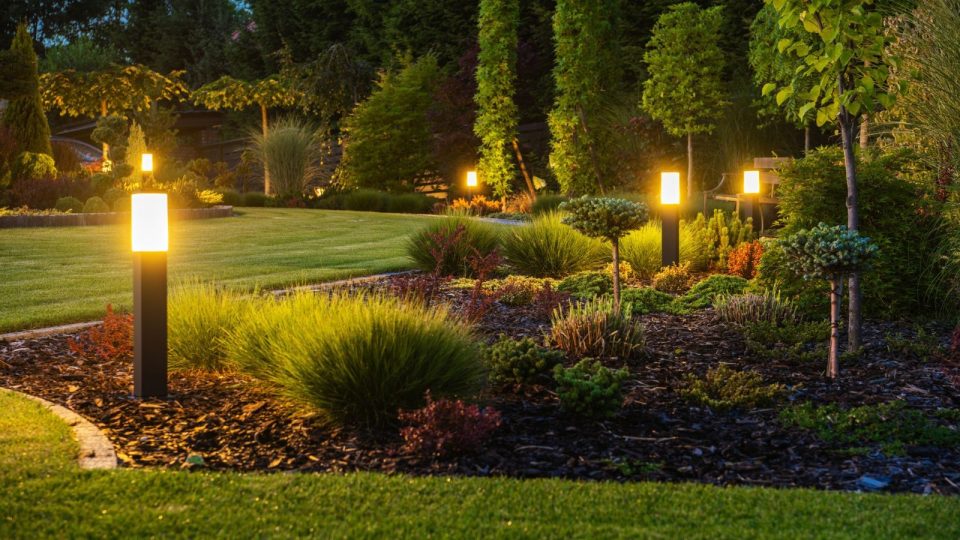
Pathway fixtures should illuminate the walking surface adequately for safe use without directing light upward into the eyes of people using the path. Low-mounted bollard fixtures, step lights integrated into risers, and in-ground fixtures that illuminate the path from below all achieve this without the glare of tall fixtures at eye level.
Landscape accent fixtures require the most precise directionality of any outdoor zone. A well-placed accent light highlights a specimen tree, a garden structure, or an architectural feature; a poorly placed one washes the feature with unflattering light from the wrong angle or creates light spill onto adjacent areas that was not intended. Adjustable mounting brackets that allow aim adjustment after installation are worth specifying for accent applications.
Security lighting should be bright, motion-activated, and positioned to illuminate the areas most relevant to intrusion risk — primary access points, dark corners of the property, areas not visible from the street or from adjacent properties. Security lighting effectiveness comes from coverage and reliability, not from decorative integration with landscape lighting.
