
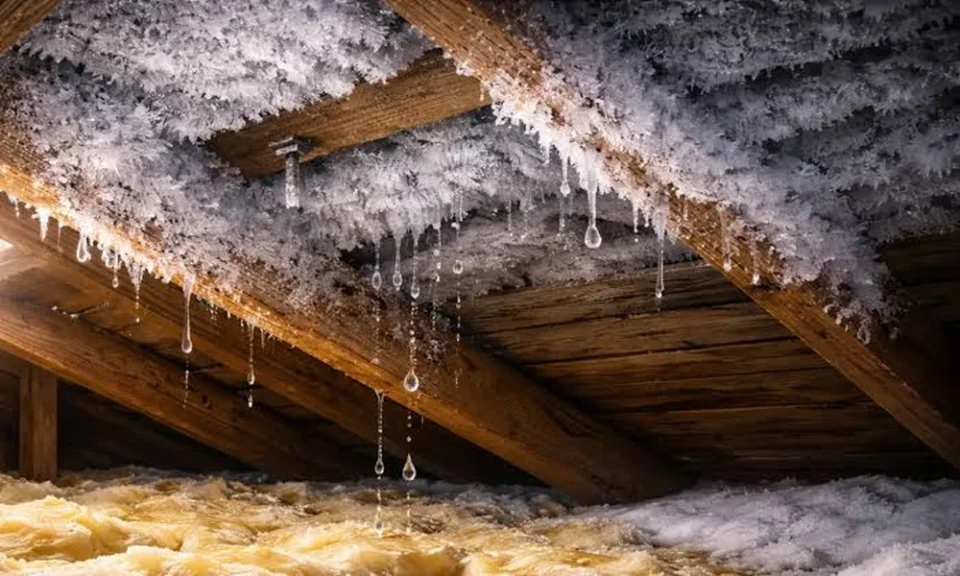
On the coldest mornings of the year, a quick look into the attic can reveal something unexpected. The underside of the roof deck glitters with white crystals, and every nail poking through the sheathing wears a tiny frozen cap. It looks harmless, almost pretty. Yet that thin coating of frost is one of the most overlooked causes of roof decay in cold climates, and it rarely shows on the outside of the house until the damage is well underway.
Roofers who handle winter inspections run into this pattern again and again. Crews from Rocket Roofing and Development work across the Midwest, where long freezes and sudden thaws put attics through a punishing cycle that new shingles alone cannot fix. The roof deck sits between two very different worlds: a warm, humid house below and a bitter winter sky above. When those two worlds meet in the wrong place, water appears where no rain ever got in.
If you understand where the frost comes from, what clues it leaves and which fixes actually work, you can avoid replacing rotted sheathing years before you should have to.
Where the Water Actually Comes From
A heated home in winter holds far more moisture than most people realize. Showers, cooking, laundry, houseplants and simple breathing release water vapor all day long. Over a week, a busy household can put several gallons of water into the air.
Warm air rises, and in winter it rises with real force. This is called the stack effect. Heated air pushes upward through any opening in the top floor ceiling: recessed light fixtures, the attic hatch, plumbing vent chases, wiring holes and the gaps around chimneys. Once that air reaches the attic, it meets roof sheathing that may be far below freezing. On clear nights the roof also radiates heat to the sky, so the sheathing gets colder than the air around it. The vapor skips the liquid stage and freezes straight onto the wood.
Many homeowners assume poor ventilation is the root cause. Ventilation does help an attic dry out, but it is not what creates the frost. Air leaking up from the living space is the real source. Adding more roof vents without sealing those leaks can even pull more warm air upward and make the problem worse.
Trouble Starts When the Frost Melts
While it stays frozen, frost does very little harm. The damage begins when a warm spell or a sunny afternoon heats the roof. Weeks of buildup can melt in a few hours and rain down onto the insulation and ceiling drywall below.
This is why so many homeowners call a roofer about a leak on a dry, bright day. The ceiling stain is real, but no shingle has failed. The water came from inside the house all along.
Repeated cycles take a steady toll. Oriented strand board swells and starts to separate into layers. Plywood darkens and softens around the edges. Nails rust and lose their grip on the shingles above. Wet insulation loses much of its insulating value, which lets even more heat into the attic and feeds ice dams along the eaves. Mold often follows, appearing as gray or black spotting across the sheathing.
Reading the Clues During a Cold Snap
The best time to check an attic is during or just after a stretch of very cold weather. Bring a good flashlight and look for these signs:
- Dark streaks on top of the insulation, where dusty house air has been filtering through a hidden gap.
- Rust rings around the nail tips that stick through the roof deck.
- Frost bunched in one area, such as directly above a bathroom or kitchen.
- Heavier staining on the north slope, which stays colder and dries more slowly than the sunny side.
- Ceiling stains that show up after a thaw even though there has been no rain or snowmelt on the roof.
The pattern tells you a lot. A true roof leak usually leaves a narrow wet trail running down from one entry point. Condensation spreads more evenly across many rafter bays and tends to cover wide patches of the deck.
The Usual Suspects Behind the Ceiling
Bathroom exhaust fans are among the worst offenders. Many are vented straight into the attic, or their ducts have slipped loose over the years. Every shower then blows a plume of steam right onto the cold sheathing. Dryer vents with failed connections cause the same problem on a larger scale.
Other leaks are harder to spot. Recessed lights in older homes often have open housings. Gaps around plumbing stacks and wiring holes in the top plates of interior walls let air move freely. The space around a chimney is often left wide open. Even an attic hatch that seems to close properly can leak a surprising amount of air if it has no weatherstripping or insulation. ENERGY STAR’s attic guidance notes that these hidden attic air gaps often reveal themselves through darkened insulation or frost in cold weather, and recommends sealing them with expanding foam or caulk.
Fixes That Work and Fixes That Waste Money
The order of the work matters. Seal the air leaks first, then add insulation, and only then fine tune the ventilation. If you insulate over open gaps, you hide the leaks but do nothing to stop them.
Make sure every exhaust fan runs through an insulated duct to a proper vent outside, not to a soffit where the moist air can drift back in. Check that the soffit intakes are clear and that baffles hold the insulation back from the eaves so air can move along the underside of the deck. During the deepest cold, keep household humidity modest and avoid running humidifiers at high settings.
Some popular fixes do little to help. Powered attic fans can actually lower the air pressure in the attic and pull more conditioned air up from the house. Putting a dehumidifier in the attic treats the symptom and leaves the source untouched. Simply cutting in more roof vents without addressing the leaks can make the condensation worse.
Planning Around the Seasons
Air sealing is easiest in mild weather, when the attic is safe to work in and the insulation is dry. If you find frost in the middle of winter, the short term steps are to lower indoor humidity, reconnect any loose ducts and keep an eye on the ceilings during thaws. Save the larger work for spring.
Whenever the roof is due for replacement, ask for a close inspection of the deck once the old shingles come off. Swollen or delaminated panels should be replaced at that point, because new shingles nailed into weakened wood will never hold as well as they should.
A frosty attic is easy to dismiss as a quirk of winter. In reality it is a slow leak running in reverse, from the house up into the roof. If you catch it early and stop the air at its source, the roof deck can last as long as the shingles meant to protect it.
