
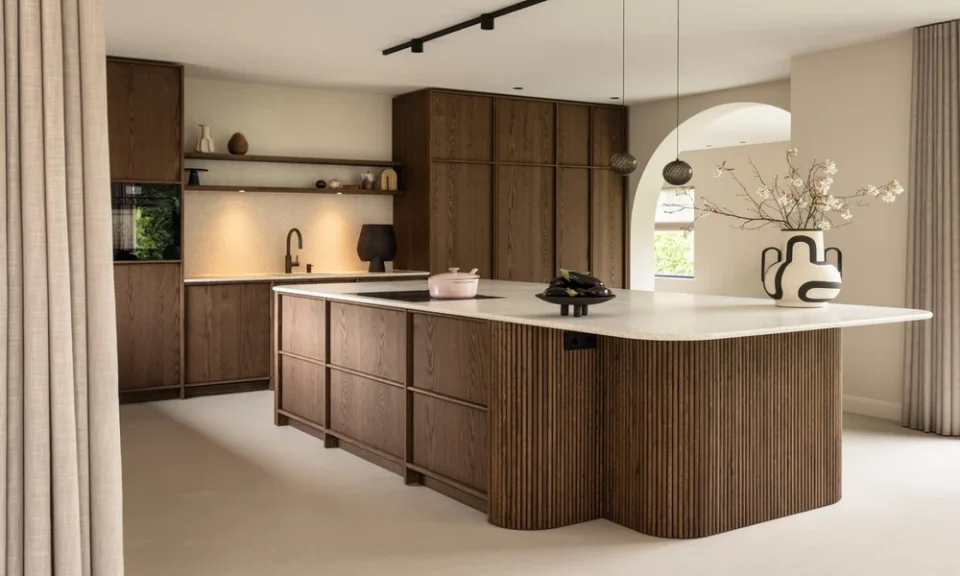
A kitchen can feel warm and inviting even when the palette is pared back. Texture makes much of the difference. In well-designed fluted kitchens, a series of vertical grooves catches the light and brings depth to otherwise plain cabinetry. On an island, the detail can give the room a focal point. On a drinks cabinet or a window seat, it can make fitted joinery feel closer to a piece of furniture. Where you put the detail matters as much as the finish you choose.
Start with the View into the Room
Before choosing a profile, stand at the point where you usually enter the kitchen. In an open-plan home, try the view from the dining table and sofa as well. An island may fill the foreground from one position while a bank of tall cupboards dominates from another. Those views tell you which surfaces can carry a detail and where a quieter finish would give the room some breathing space.
The back of an island is often a good place to begin. In a kitchen extension, it may be the part of the kitchen you see most often from the garden or dining area. Fluting gives that broad surface some definition and makes the island feel at home alongside upholstered chairs and other furniture. Carrying the grooves around a curved end can soften the island’s outline, especially where the route through the room bends around it.
Choose a Profile That Suits the Scale
Closely spaced, shallow grooves can read as a fine texture across a small cabinet. Deeper grooves cast stronger shadows, giving a larger surface more definition. The spacing matters, too. On a long run of drawers, a narrow pattern can feel quite busy, particularly if the joins interrupt the rhythm. A wider profile can sit more comfortably against a thick stone worktop or generously proportioned doors.
Ask to see a sample large enough to include several repeats, then hold it upright. A sample laid flat on a showroom table catches the light differently from a door or island panel. If the detail will run across several fronts, check how the grooves meet at the joins. On a pair of doors, a symmetrical layout can make a cabinet feel carefully made. At an exposed corner, the way the pattern turns is just as noticeable.
Let the Materials Set the Mood
Natural oak brings a gentle warmth to a neutral room, and the grain adds variation between each groove. In a kitchen with pale stone and painted cabinetry, oak fluting on a single feature can be enough to make the whole scheme feel warmer. Darker timber gives the detail more presence. It can work particularly well on a freestanding-style pantry or drinks cabinet, where a richer finish helps the piece stand apart from the main cabinetry.
Painted fluting is a good choice when you want the texture to sit quietly within a single colour scheme. An island painted in the same soft green as the surrounding cupboards will still look distinct because the grooves pick up highlights and shadows. Compare the paint and worktop samples side by side. A stone with lively veining has plenty of character on its own, and a finer profile nearby gives both surfaces space to be appreciated.
Plan for Daylight and Evening Use
The same panel can look quite different at breakfast and after dark. Daylight coming across the grooves makes them more pronounced. Light falling directly onto the front gives a gentler effect. If the island faces wide garden doors, look at the sample at different points in the day. The difference between a bright morning and a shaded afternoon can tell you how much depth the profile needs.
Plan the evening lighting while the cabinetry is still being designed. A fitting that casts light across a display cabinet can pick up the texture and give the room a softer focus when the cooking is done. Above the island, keep enough light on the worktop for chopping and serving. The texture can take a supporting role while the room is in use and come into its own once the brighter lights are switched off.
Put the Detail Where It Will Be Easy to Live With
Think about what happens around the feature on an ordinary weekday. Around the hob and sink, smooth cabinet fronts are easier to wipe after splashes. A fluted panel on the dining side of an island is usually farther away from cooking and washing up, though it still needs a finish that can cope with shoes, stools and the occasional knock. A shallow profile makes routine cleaning simpler in areas that see frequent use.
Handles and drawer edges are worth looking at in person. Try opening a sample door and see where your fingers naturally go. On a tall cupboard used several times a day, a comfortable handle and a finish that can be wiped easily make a noticeable difference. For an island with seating, ask how the panel, worktop overhang and stool positions fit together. Someone sitting at the island should have room to pull in comfortably without catching their shoes on the cabinetry.
Carry the Detail into an Adjoining Room
A small echo of the kitchen joinery can help two spaces feel connected. In a kitchen that opens onto a dining room, a fluted section on the sideboard might pick up the profile of the island. In a period home, painted fluting on a fitted cabinet can sit comfortably with the vertical lines of panelling or a glazed door. The finish can change between rooms while the spacing of the grooves gives the pieces something in common.
When you start planning, take a few photos of the kitchen from the adjoining rooms and make a note of the surfaces you see most often. Bring those views into the conversation alongside any samples you like. If you would like to see how bespoke cabinetry can work with different layouts and materials, browse the projects from Kemp Kitchens Design Studio.
