
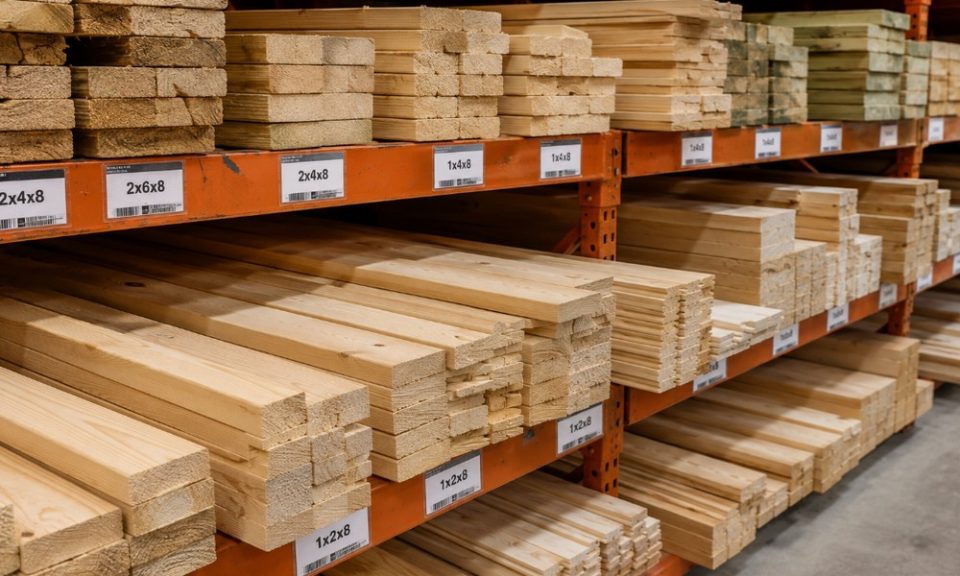
Choosing the right lumber can feel simple at first. You walk into a store, look at a few boards, and pick the one that seems strong enough. But once you start comparing wood types, grades, sizes, moisture levels, and treatments, it can get confusing fast.
The right lumber matters because it affects how your project looks, how long it lasts, and how safely it performs. A board used for a bookshelf does not need the same qualities as lumber used for a deck, fence, wall frame, or outdoor bench. Before buying, it helps to understand what your project actually needs.
Start With the Purpose of the Project
The first question is simple: what are you building?
If the lumber will support weight, like framing, stairs, joists, or shelves, strength matters most. If it will be visible, like trim, cabinets, furniture, or wall paneling, appearance matters more. If it will be outdoors, moisture resistance becomes a major concern.
For example, a garden box needs lumber that handles soil and moisture. A table needs wood that looks nice and stays stable. A shed frame needs strong, straight boards. Matching the lumber to the purpose keeps the project safer and helps avoid early damage.
Know the Difference Between Softwood and Hardwood
Lumber is often grouped into softwood and hardwood. The names can be a little misleading, though. Some softwoods are quite strong, and some hardwoods are easier to dent than expected.
Softwoods usually come from trees like pine, fir, cedar, and spruce. They are common for framing, decks, fencing, shelving, and general building projects. They are usually easier to cut and more affordable.
Hardwoods come from trees like oak, maple, walnut, cherry, and birch. They are often used for furniture, cabinets, flooring, and detailed finish work. They tend to have richer grain patterns and better durability for visible surfaces.
If the project is structural, softwood may be the practical choice. If the project is decorative or furniture-related, hardwood may be worth considering.
Check the Lumber Grade
Lumber grade tells you something about quality. It may refer to strength, appearance, knots, defects, or intended use. For construction lumber, grade affects how much weight the wood can safely handle. For appearance lumber, grade affects how clean and smooth the board looks.
Higher-grade lumber usually has fewer knots, cracks, and defects. Lower-grade lumber may still work for rough projects where appearance is not important.
If you are building something structural, do not choose boards only by looks. Make sure the lumber grade fits the job. For furniture or visible indoor work, look for boards with better grain, fewer blemishes, and less warping.
Think About Indoor vs Outdoor Use
Outdoor lumber needs extra consideration. Rain, humidity, sun, soil contact, and insects can break down untreated wood over time. If your project will be outside, use lumber that can handle exposure.
Pressure-treated lumber is commonly used for decks, fences, posts, and other outdoor structures. It is treated to resist rot and insects. Cedar and redwood are also popular outdoor choices because they naturally resist decay better than many other woods.
For indoor projects, untreated lumber is often fine. In fact, untreated wood is usually better for furniture, shelving, and interior trim because it is easier to finish and does not contain outdoor treatment chemicals.
Look for Straight, Stable Boards
Even the right wood type can cause problems if the board itself is warped, twisted, cracked, or bowed. Before buying, inspect each board.
Look down the length of the lumber from one end. This helps you spot bends or twists. Check for splits, large knots, soft spots, and rough edges. A small knot may be fine, especially for rustic projects. But large knots near the edge can weaken the board.
Straight boards are easier to cut, fasten, and finish. They also make the final project look better.
Understand Moisture Content
Wood expands and shrinks as it takes in or loses moisture. This movement can cause gaps, cracks, warping, or loose joints. That is why moisture content matters.
Kiln-dried lumber has been dried in a controlled way, making it more stable for indoor projects. Green lumber has more moisture and may shrink or move as it dries. Pressure-treated lumber can also be wet when purchased, so it may need time to dry before staining or painting.
For indoor furniture or trim, dry and stable lumber is important. For outdoor framing, some movement may be expected, but you still want boards that are not overly wet or distorted.
Consider the Finish You Want
If you plan to paint the project, the grain pattern may not matter as much. If you plan to stain or seal it, choose wood with a grain and color you like.
Some woods take stain evenly. Others can look blotchy without proper preparation. Pine, for example, often needs a pre-stain conditioner for a more even finish. Hardwoods like oak usually show stain beautifully because of their strong grain pattern.
Think about the final look before buying the lumber. It is easier to choose the right board at the start than to force a finish later.
Buy a Little Extra
Mistakes happen. Boards split. Cuts come out wrong. Some pieces may have hidden defects. Buying a little extra lumber can save a second trip and reduce stress.
A good rule is to buy around 10% more than your exact measurement, especially for projects with many cuts. For detailed finish work, you may want even more to match grain and color.
Final Thoughts
Choosing the right lumber starts with knowing your project. Think about strength, appearance, indoor or outdoor use, wood type, grade, moisture, and finish. Check each board carefully before buying, and do not choose based only on price.
The right lumber makes the project easier to build and better looking when finished. It also helps the final piece last longer. A little planning at the start can prevent a lot of frustration later.
This post was written by a professional at Anawalt Lumber. Anawalt Lumber is a family-owned lumber yard and hardware store Los Angeles for over a century. Known for quality lumber, contractor supplies, hardware, and a full-service nursery, Anawalt provides personalized service for homeowners and licensed contractors. From job pricing and bulk discounts to special-order materials with fast delivery, Anawalt is your trusted local building supply partner in Malibu, West LA, and Hollywood.
