
Central Air vs. Ductless Mini-Split: The Best Way to Cool Older Florida HomesTable of Contents
- Introduction
- Understanding Central Air Conditioning
- Exploring Ductless Mini-Split Systems
- Installation Considerations
- Energy Efficiency and Costs
- Aesthetic and Space Implications
- Maintenance and Longevity
- Making the Right Choice
Cooling older homes in Florida presents unique challenges, especially when weighing traditional central air conditioning against ductless mini-split systems. Many homeowners struggle to decide which system brings superior comfort, energy efficiency, and ease of installation. For those considering options, understanding the comparison between central air and ductless mini-split systems is essential for making an informed decision, particularly when exploring South Florida ductless HVAC solutions tailored to older properties.
Older homes often feature architectural features that complicate the installation of modern HVAC systems. Homeowners need to evaluate how air conditioning options affect preservation of original features, overall energy use, and day-to-day comfort. This guide details the advantages and drawbacks of both central air and ductless mini-split systems, so homeowners can choose what’s best for their specific needs. Whether upgrading an aging system or researching ductless HVAC alternatives, understanding these factors can help ensure long-term comfort and efficiency.
Understanding Central Air Conditioning
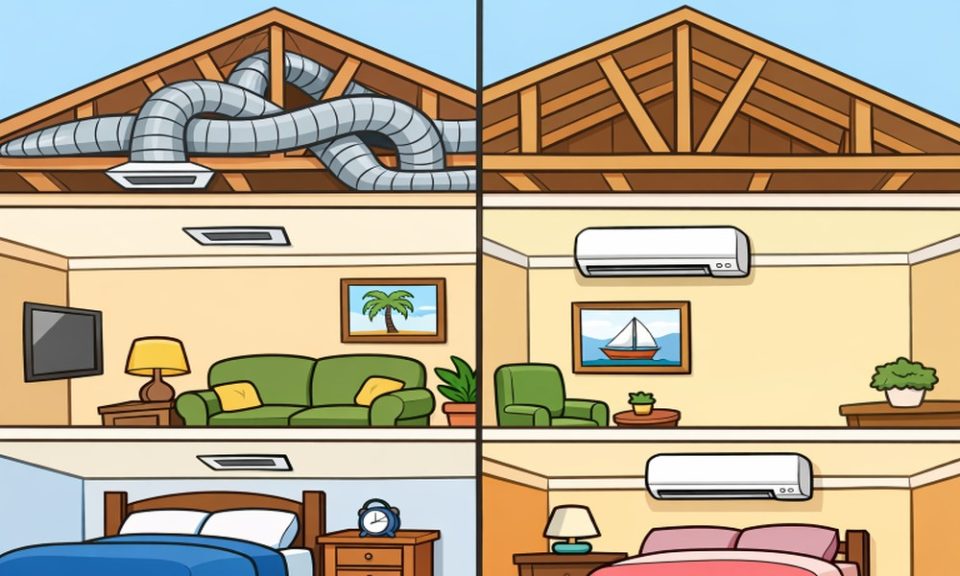
Central air conditioning uses a network of ducts to circulate cooled air throughout the home. This type of system is an excellent fit for properties with existing ductwork, as it provides even cooling in each room and enables easy, centralized temperature control via a thermostat. Central air systems remain a popular choice for quickly and efficiently cooling homes, especially during Florida’s sweltering summers.
However, in homes designed before the widespread adoption of central HVAC, the absence of built-in ducts can make retrofitting a central air system challenging. Installing new ductwork often involves removing walls, ceilings, or floors, which can disrupt the original structure and require extensive repairs.
Exploring Ductless Mini-Split Systems
Ductless mini-split systems are quickly gaining popularity in Florida for households that don’t have or want traditional ductwork. These systems feature outdoor compressors connected via small conduit lines to indoor air-handling units, which are typically mounted on interior walls. The design of these systems minimizes the construction required within the home, preserving its historic character and fabric. Mini-split systems also grant room-by-room control. Each indoor unit can be set to a different temperature, making it easier to tailor cooling to different spaces and providing enhanced comfort throughout the home.
Installation Considerations
Retrofitting a traditional central air conditioning system into an older home can be a significant undertaking. Without existing ducts, installation often means making invasive changes to the house, which can be both costly and time-consuming. This process risks altering irreplaceable features such as original woodwork, plasterwork, or decorative ceilings.
Ductless mini-splits require far less structural disruption. The connecting conduit between the outdoor and indoor units usually needs only a small hole in an exterior wall. This preserves the home’s character and expedites installation, reducing both labor and expenses. In many older homes, the non-invasive nature of mini-split systems can be the difference between comfort and the risk of losing historical value.
Another consideration is the size of the system needed. Central air systems are generally designed to cool the entire home from a single point, which may be ideal for larger or more evenly used spaces. In contrast, ductless mini-splits excel in situations where only select areas require climate control or where people occupy different rooms at different times, helping avoid unnecessary energy consumption. In multi-story homes or spaces with poorly served additions, mini-splits provide a modern solution without the need for substantial construction. Additionally, mini-split systems can be added incrementally. Homeowners with limited budgets or who plan phased renovations can install units in high-priority areas first, then expand the system as needs and resources allow.
Energy Efficiency and Costs
Energy efficiency is a vital consideration in Florida, thanks to long, humid summers that require constant air conditioning. Mini-split systems typically offer higher SEER (Seasonal Energy Efficiency Ratio) ratings than most central air systems. They also eliminate energy loss caused by duct leaks, a leading cause of wasted energy in central systems, which the U.S. Department of Energy says can account for up to 30% of energy consumption.
Over time, the higher efficiency of ductless systems can result in substantial savings on energy bills, even though the upfront cost per unit may be higher. Central air systems, meanwhile, can prove more cost-effective in homes with existing ductwork, where installation costs stay low and cooling requirements are uniform throughout the house.
When considering costs, it’s important to look at both the lifetime cost of ownership and available rebates or incentives. Many local utilities and government programs in Florida offer rebates for upgrading to energy-efficient HVAC systems, including ductless mini-splits. These benefits can help offset some of the initial investment, making high-efficiency systems more accessible for homeowners. Furthermore, with energy rates in Florida subject to seasonal fluctuations, making the switch to a more efficient system could yield significant savings over the long run. Homeowners should also weigh the potential increase in home value that comes with a modern, efficient cooling system. This is often seen as a major selling point by prospective buyers, especially in regions with near year-round cooling demands.
Aesthetic and Space Implications
Central air conditioning is virtually invisible inside the home. All that’s visible are vents in different rooms, which blend seamlessly into walls and ceilings. Mini-split systems, on the other hand, rely on mounted air-handling cassettes that are visible in each cooled area. While initial designs were sometimes bulky and visually intrusive, modern units are sleeker and can be strategically placed for minimal impact on the home’s aesthetics.
With thoughtful placement and new, slender profiles, many homeowners find that mini-split air handlers do not detract significantly from décor. For those who prioritize completely hidden systems, however, central air may remain the preferred option.
Another emerging trend is the availability of designer mini-split covers and casings that complement rather than clash with your home’s interior style. Manufacturers now offer mini-split air handlers in various colors and profiles, some of which are customizable, giving homeowners more choices for blending technology with personal taste. For homes where exposed units remain a concern, creative solutions such as cabinetry modifications or decorative screens can conceal indoor components without compromising performance or airflow. Whenever evaluating aesthetics, it’s crucial to balance the practical benefits of advanced climate control with the desire for a visually appealing living space.
Maintenance and Longevity
Proper maintenance is essential for the longevity of both central air and mini-split systems. Central air systems require periodic duct cleaning and leak checks, along with routine filter replacement. Mini-split systems demand regular filter cleaning and periodic checks of refrigerant lines and fans. Both types benefit from annual inspections by HVAC professionals to ensure efficient operation and to catch small issues before they turn into expensive repairs.
With consistent care, both central and mini-split systems can deliver reliable service for a decade or more. The maintenance obligations for mini-splits tend to be less invasive, as there are no ducts to clean and fewer points of failure in older homes. Regular maintenance can further maximize efficiency and extend your system’s operational lifespan.
In addition to routine care, homeowners should consider the availability of replacement parts and qualified service professionals for their chosen system. Central air systems have long been the industry standard, so finding parts and technicians is rarely a problem. Mini-split systems, while rapidly growing in popularity, may sometimes require technicians with specialized training, especially for newer or less common brands. Therefore, it is advisable to select reputable HVAC brands and establish a service relationship with a provider familiar with your system. Homeowners who factor in the ease and cost of future repairs when making their decision are more likely to enjoy uninterrupted comfort for years to come.
Making the Right Choice
For Florida homeowners, choosing between central air and ductless mini-split systems depends on individual circumstances. Key considerations include whether the home already has ductwork, preservation of historic architecture, energy-efficiency goals, and budget constraints. In homes without ducts, or where preservation is paramount, ductless mini-splits offer flexible, efficient cooling with little disturbance to the building. Where ducts are already present, and the structure easily accommodates them, central air can remain the most practical and affordable option for whole-house comfort.
Consulting with an HVAC expert is highly recommended to evaluate your older home’s needs. An experienced professional can assess your structure, climate demands, and budget to help you achieve year-round comfort with minimum compromise. Consider additional factors such as available incentives or rebates, system warranties, and the potential impact on home resale value when making this important investment decision for your property. Making an educated choice leads to a more comfortable, efficient, and enjoyable Florida home throughout the intense heat of summer and milder winter months.
Ultimately, the goal is to create a healthy and enjoyable indoor living environment without sacrificing your home’s historical character or blowing your energy budget. Whether opting for the seamless integration of central air or the strategic flexibility of ductless mini-splits, today’s HVAC solutions make it possible to blend comfort with preservation, ensuring older homes remain both functional and beautiful for generations to come. If you’re ready to start your project, reach out to local experts for a detailed assessment and explore available grants or financial incentives to make your upgrade as affordable and effective as possible. The payoff is a cooler, more comfortable home that honors its unique past, making the investment worthwhile for homeowners across Florida.
