
Understanding Common Turf Pests and Infestation Signs
Maintaining a beautiful, healthy lawn is a common goal for many homeowners. Yet, achieving this often involves navigating the complexities of pest management while ensuring the long-term health of our turf and the surrounding environment. We all desire outdoor spaces that are not only aesthetically pleasing but also sustainable and resilient.
This extensive guide will explore how to achieve a vibrant lawn through integrated approaches to care and pest control. We will delve into identifying common lawn pests, understanding their impact, and implementing effective strategies. From comprehensive soil health techniques to advanced Integrated Pest Management (IPM) practices, we will cover both proactive prevention and targeted solutions. We’ll also examine when professional expertise, such as that offered by local specialists in Akron lawn care pest management, can provide the best long-term results. Our goal is to empower you with the knowledge to foster a thriving, pest-resistant lawn for years to come.
A lush, green lawn can quickly turn into a patchy, brown mess if left unprotected from common turf pests. Identifying these invaders early is crucial for effective management. Let’s explore some of the most prevalent culprits and the tell-tale signs of their presence.
White Grubs
White grubs are the larval stage of various beetles, including Japanese beetles, June bugs, and chafers. These C-shaped larvae live beneath the soil surface, where they feed voraciously on grass roots.
- Damage: Grubs sever the roots from the grass blades, preventing the turf from absorbing water and nutrients. This leads to irregular brown patches that often appear in late summer or early fall.
- Signs of Infestation:
- Spongy Turf: The grass may feel soft and spongy underfoot, as if walking on a loose carpet.
- Brown Patches: Irregularly shaped dead or dying patches of grass that don’t respond to watering.
- Animal Digging: Raccoons, skunks, and birds often dig up affected areas to feed on the grubs, leaving behind overturned sod.
- Easy to Pull Up Grass: In severe cases, you can easily lift sections of turf like a piece of carpet, revealing the grubs underneath.
Chinch Bugs
These tiny insects, typically only about 1/5 of an inch long, are surface feeders that can cause extensive damage, particularly in hot, dry conditions.
- Damage: Chinch bugs use their piercing-sucking mouthparts to extract sap from grass blades, injecting a toxin that disrupts the plant’s vascular system.
- Signs of Infestation:
- Wilting Grass: Grass blades may appear purplish-red initially, then turn yellow and eventually brown.
- Irregular Brown Patches: These patches often start in sunny, hot areas and expand outwards, sometimes resembling drought stress. Unlike drought, watering doesn’t revive the grass.
- Visible Insects: Part the grass near the edge of a damaged area and look closely at the soil surface; tiny, fast-moving chinch bugs may be visible.
Armyworms
Armyworms are caterpillars that can rapidly defoliate large sections of a lawn. They are particularly active during late summer and early fall.
- Damage: These pests feed on grass blades, often moving in large groups (hence “armyworm”), consuming vast amounts of turf almost overnight.
- Signs of Infestation:
- Chewed Blades: Grass blades appear ragged, with chewing marks along the edges.
- Rapid Defoliation: Large areas of lawn can be stripped down to the soil in a short period.
- Visible Larvae: Green or brown caterpillars with distinctive stripes may be seen marching across the lawn, especially in the early morning or late evening.
Sod Webworms
Sod webworms are the larvae of small moths. They feed on grass blades near the soil surface, often creating silken tunnels or webs within the thatch layer.
- Damage: They chew off grass blades, leading to small, irregular brown patches.
- Signs of Infestation:
- Irregular Brown Patches: Similar to chinch bug damage, but often with visible silken tubes or tunnels in the thatch.
- Moth Activity: Small, white or gray moths may be seen flying low over the lawn at dusk, laying eggs.
- Chewed Blades: Close inspection reveals grass blades chewed down to the crown.
General Infestation Indicators
Beyond specific pest signs, general indicators like thinning turf, unusual discoloration, or a sudden increase in birds or other animals feeding on your lawn can signal a problem. It’s important to understand the concept of threshold levels – the point at which pest populations are high enough to cause unacceptable damage and warrant intervention. Early detection and accurate identification are key to preventing minor issues from escalating into major problems. When facing persistent or difficult-to-diagnose pest issues, seeking expert advice from local professionals, such as those specializing in Akron lawn care pest management, can provide accurate diagnosis and effective solutions.
The Core Principles of Effective Lawn Care and Pest Management
A truly healthy lawn is its own best defense against pests and diseases. By focusing on fundamental lawn care principles, we can create an environment where grass thrives and pests struggle to establish themselves. This holistic approach forms the backbone of sustainable pest management.
Building a Strong Foundation: Soil Health
The health of your lawn begins beneath the surface, in the soil.
- Soil Testing: Regular soil testing is non-negotiable. It provides a precise analysis of your soil’s composition, nutrient levels, and pH. This information is vital for tailoring fertilization programs and making necessary amendments.
- pH Balancing: Grass thrives within a specific pH range. If your soil is too acidic or too alkaline, nutrients become unavailable to the grass roots, weakening the turf and making it more susceptible to pests. Lime applications can raise pH, while sulfur can lower it, bringing the soil into optimal balance.
- Nutrient Absorption: When soil pH and nutrient levels are balanced, grass roots can efficiently absorb the essential nutrients they need. This leads to stronger, more resilient plants that are better equipped to withstand environmental stresses and pest attacks.
Enhancing Turf Vigor: Aeration and Overseeding
These practices directly contribute to a denser, healthier lawn that naturally resists pest infestations.
- Aeration: Over time, soil becomes compacted, restricting the flow of air, water, and nutrients to grass roots. Aeration, particularly liquid aeration, creates small holes or pathways in the soil, relieving compaction. This allows roots to grow deeper and stronger, improving the lawn’s overall vigor.
- Overseeding: Following aeration, overseeding introduces new grass seeds into existing turf. This increases turf density, filling in bare spots and making it harder for weeds to germinate and pests to find suitable habitats. A thick lawn simply has less room for pests to take hold.
Managing Thatch
Thatch is a layer of organic matter (dead grass, stems, roots) that accumulates between the soil surface and the green blades of grass.
- Impact on Pests: A thin layer of thatch (less than half an inch) can be beneficial, acting as a natural mulch. However, excessive thatch provides an ideal hiding place for many lawn pests, such as chinch bugs and sod webworms, protecting them from predators and pesticides. It can also prevent water and nutrients from reaching the soil.
- Management: Proper mowing, watering, and fertilization practices can help manage thatch. In severe cases, dethatching may be necessary.
Strategic Fertilization for Resilience
Fertilization isn’t just about making your lawn green; it’s about providing the right nutrients to build pest resistance.
- Slow-Release Nitrogen: This type of nitrogen feeds the lawn gradually over an extended period, promoting steady, healthy growth rather than sudden surges that can make grass more vulnerable.
- Potassium for Immunity: Potassium is crucial for strengthening cell walls, improving drought tolerance, and enhancing the grass’s ability to resist diseases and insect stress. It acts as an immune booster for your lawn.
- Micro-nutrients: While needed in smaller amounts, micro-nutrients like iron, manganese, and zinc play vital roles in various physiological processes, contributing to overall plant health and resilience.
By integrating these core principles into our lawn care regimen, we cultivate robust, healthy turf that is inherently less appealing and more resistant to pest damage. For a holistic approach to lawn health that integrates effective pest control with essential nourishment, exploring balanced lawn pest programs, like those offered by BioSpray’s balanced lawn pest programs, can be highly beneficial. This proactive strategy reduces our reliance on reactive pest control measures, leading to a more sustainable and vibrant outdoor space.
Implementing Integrated Pest Management (IPM) Strategies
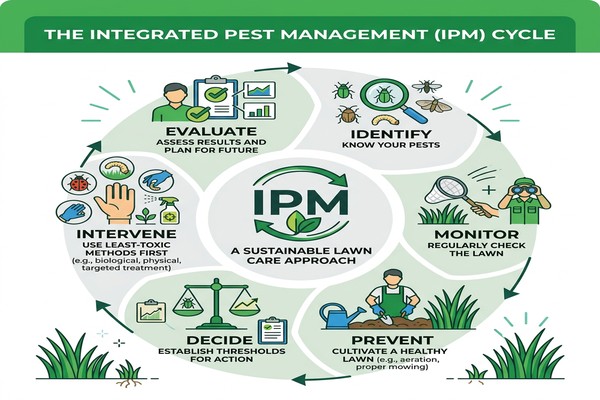
Integrated Pest Management (IPM) is a cornerstone of modern, sustainable lawn care. It’s an environmentally sensitive and effective approach to pest control that relies on a combination of common-sense practices. IPM programs use current, comprehensive information on the life cycles of pests and their interaction with the environment. This information, in combination with available pest control methods, is used to manage pest damage by the most economical means, and with the least possible hazard to people, property, and the environment.
How IPM Works for Lawns
The IPM approach involves several key steps:
- Monitoring and Identification: Regularly inspecting the lawn for pests and accurately identifying them. This helps us understand the specific pest, its life cycle, and its potential for damage.
- Setting Action Thresholds: Determining at what point pest populations are high enough to warrant control measures. Not every pest sighting requires intervention; sometimes, the lawn can tolerate a small population without significant damage.
- Prevention: Implementing cultural practices that make the lawn less hospitable to pests. This includes proper mowing, watering, fertilization, aeration, and thatch management-all the core principles discussed earlier.
- Control: If prevention isn’t enough and thresholds are exceeded, IPM employs a range of control tactics, starting with the least invasive:
- Cultural Controls: Adjusting watering schedules, mowing heights, or fertilizing practices to reduce pest pressure.
- Biological Agents: Introducing or encouraging natural enemies of pests, such as beneficial nematodes for grubs or predatory insects.
- Mechanical/Physical Controls: Hand-picking larger pests, using traps, or applying barriers.
- Targeted Applications: Using pesticides only when necessary, in specific areas, and choosing products that are least harmful to beneficial organisms and the environment.
Benefits of IPM
IPM offers significant advantages:
- Environmental Stewardship: By minimizing pesticide use, IPM protects beneficial insects, pollinators, wildlife, and water quality.
- Reduced Chemical Use: Studies show that IPM techniques in lawn programs can reduce weed and pest control applications by up to 90% compared to traditional, calendar-based programs. This translates to fewer chemicals in our environment.
- Long-Term Effectiveness: IPM addresses the root causes of pest problems, leading to more sustainable and lasting solutions rather than simply reacting to symptoms.
- Cost-Effectiveness: By reducing unnecessary pesticide applications, IPM can often be more economical in the long run.
Natural Solutions for Lawn Care and Pest Management
For those seeking to minimize synthetic chemical use, a variety of organic and natural pest control options are available and can be highly effective within an IPM framework.
- Cedar Oil: This natural oil is an excellent repellent and insecticide for various pests, including mosquitoes, fleas, and ticks. It’s often used in liquid applications for perimeter pest control and targeted treatments.
- Beneficial Nematodes: These microscopic roundworms are natural parasites of many soil-dwelling pests, notably grubs. They seek out and kill pest larvae without harming plants, pets, or humans.
- Organic Fertilizers: Derived from natural sources like compost, manure, and plant extracts, organic fertilizers improve soil health and feed the grass slowly, promoting strong, natural growth that resists pests. They also support a healthy soil microbiome, which can help suppress pests.
- Pollinator Safety: Many natural solutions are inherently safer for beneficial insects like bees and butterflies, which are crucial for our ecosystem.
- Botanical Oils and Non-Toxic Repellents: Products derived from plants (e.g., neem oil, garlic oil, essential oils) can deter or kill pests through various mechanisms, often with low toxicity to mammals. They are excellent for targeted applications.
Optimal Timing for Lawn Care and Pest Management
Timing is everything in pest management. Understanding pest life cycles allows us to intervene when pests are most vulnerable or before they cause significant damage.
- Life Cycles: Each pest has a specific life cycle with egg, larval, pupal, and adult stages. Targeting the most vulnerable stage (often the larval stage) is key.
- Late Summer Grub Control: For grubs, the ideal time for control is typically late summer (August to early October) when the grubs are young, actively feeding, and close to the soil surface. Applying treatments at this stage is far more effective than trying to control mature grubs in spring.
- Seasonal Transitions: Pest activity fluctuates with seasons. For example, chinch bugs thrive in hot, dry conditions, while armyworms are more prevalent in late summer and early fall. Adjusting treatments to these seasonal patterns is crucial.
- Preventative vs. Curative: Preventative treatments are applied before a pest problem becomes severe, often targeting specific life stages (e.g., pre-emergent weed control, grub preventatives). Curative treatments are applied once an infestation is already present. IPM prioritizes prevention.
- Weather Patterns: Local weather conditions significantly influence pest activity. A mild winter might mean earlier pest emergence in spring, while a wet spring could favor certain fungal diseases.
- Treatment Frequency: For year-round protection, pest control treatments are typically scheduled several times a year. This ensures that new generations of pests are managed and that protective barriers remain effective. For instance, in regions with year-round pest survival due to favorable climates, like Florida, ongoing treatments are essential every other month.
- Year-Round Protection: A comprehensive program considers all seasons. For example, perimeter pest control might be applied quarterly to prevent common household invaders, while lawn insect control is seasonal, and mosquito/tick control runs from spring through fall.
By combining these IPM strategies, including natural solutions and precise timing, we can effectively manage lawn pests while promoting a healthier, more sustainable environment for our families and pets.
Professional vs. DIY: Ensuring Long-Term Results
When it comes to lawn care and pest management, homeowners often face a choice: tackle it themselves or hire professionals. While DIY methods can offer a sense of accomplishment and initial cost savings, professional services often provide a more comprehensive, effective, and long-term solution.
The DIY Approach: Pros and Cons
Pros:
- Cost Savings: You save on labor costs and can purchase products as needed.
- Personal Satisfaction: The pride of maintaining your own lawn.
- Flexibility: You control when and how treatments are applied.
Cons:
- Lack of Expertise: Misidentifying pests or diseases can lead to ineffective treatments or even worsen the problem.
- Incorrect Product Application: Improper mixing, application rates, or timing can waste products, harm your lawn, or pose safety risks.
- Limited Tools & Products: DIYers may not have access to professional-grade equipment or specialized, more effective products.
- Time Commitment: Proper lawn care and pest management require significant time for monitoring, research, and application.
- Potential for Environmental Harm: Incorrect use of pesticides can harm beneficial insects, pets, and the environment.
The Professional Advantage
Professional lawn care and pest management services bring a wealth of benefits that often outweigh the perceived savings of DIY. Many reputable companies, some with over 20 years in business and maintaining customers since the early 2000s, demonstrate the long-term value of their services.
- Feature DIY Methods Professional Management Expertise Limited, relies on self-education Certified, experienced, trained technicians Pest Identification Prone to misidentification Accurate diagnosis of specific pests and diseases Treatment Strategy Often reactive, trial-and-error Proactive, customized, integrated pest management plans Equipment Basic, consumer-grade Specialized, commercial-grade, efficient tools Product Access Retail-grade, limited effectiveness Professional-grade, targeted, often more potent Safety Risk of improper handling, exposure Adherence to strict safety protocols, licensed staff Time & Effort Significant personal time investment Saves homeowner time and effort Guarantees None Service guarantees, follow-up treatments (common) Long-Term Results Inconsistent, potential for recurring issues Consistent, sustainable lawn health and pest control Cost-Effectiveness Lower upfront, higher long-term if mistakes occur Higher upfront, often lower long-term due to effectiveness Licensing and Experience: Reputable companies employ licensed technicians who have undergone rigorous training. Their experience allows them to accurately diagnose problems and apply the most effective solutions. For instance, companies like Highest Quality Lawn & Pest have maintained some customers from 2000, over 20 years ago, with steady growth since beginning business, indicating consistent service quality. NaturaLawn of America has over 35+ years of expertise in organic-based lawn care services, showcasing deep industry knowledge.
- Specialized Equipment: Professionals use commercial-grade equipment for precise applications, aeration, and other treatments, which are far more effective than typical homeowner tools.
- Safety Protocols: Licensed professionals are trained in safe handling and application of all products, minimizing risks to your family, pets, and the environment.
- Service Guarantees and Follow-Up Treatments: Many professional companies offer guarantees on their work, providing peace of mind. They also schedule follow-up treatments as part of a comprehensive plan, ensuring ongoing protection and addressing any new issues promptly. This systematic approach, as seen with ExperiGreen providing year-round lawn pest treatment plans, ensures continuous management.
- Custom Agronomic Plans: Professionals don’t just spray; they assess your lawn’s specific needs, conduct soil tests, and create tailored plans that include fertilization, weed control, and pest management, often integrated into a year-round program. Grasshopper Lawns, for example, offers a 7-step ‘Weed & Feed’ program for year-round lawn thriving.
- Cost-Effectiveness in the Long Run: While initial costs may be higher, professional services can prevent costly damage, reduce wasted product, and ensure a healthier lawn, ultimately proving more economical over time.
Choosing a professional service means investing in expertise, efficiency, and peace of mind, leading to a healthier, more beautiful lawn with less effort and worry.
Frequently Asked Questions about Lawn Health
Homeowners often have specific questions about maintaining their lawns and managing pests effectively. Here, we address some of the most common inquiries to provide clarity and actionable advice.
When is the best time to apply pest control treatments?
The optimal timing for pest control treatments is highly dependent on the specific pest and its life cycle, as well as the climate of your region. However, some general guidelines apply:
- Preventative vs. Curative: Proactive, preventative treatments are often more effective and less intensive than curative measures. For example, applying grub control in late summer (August to early October) targets young grubs when they are most vulnerable and before they cause extensive damage.
- Seasonal Applications: Many pest control programs are designed with seasonal applications to target pests during their peak activity periods. For surface-feeding insects like chinch bugs or armyworms, treatment is best applied as soon as activity is noticed or when conditions are favorable for their emergence (e.g., hot, dry spells for chinch bugs).
- Year-Round Protection: For comprehensive protection, especially against pests that can survive mild winters (like in Florida), year-round treatment plans are often recommended. These typically involve several applications throughout the year to break pest life cycles and maintain continuous barriers.
- Weather Considerations: Always check weather forecasts. Light rain after application can sometimes help products penetrate the soil, but heavy rainfall can wash away treatments, necessitating reapplication.
Consulting with a local lawn care professional can provide precise timing recommendations tailored to your specific lawn, pest issues, and regional climate.
How do aeration and overseeding improve pest resistance?
Aeration and overseeding are fundamental practices that significantly boost your lawn’s natural pest resistance:
- Improved Root Development: Aeration alleviates soil compaction, allowing grass roots to grow deeper and stronger. Deep, robust root systems enable the grass to access more water and nutrients, making the turf healthier and more resilient to stress, including pest damage. Pests are less likely to thrive on vigorous, well-nourished grass.
- Enhanced Turf Density: Overseeding introduces new grass seeds, leading to a thicker, denser lawn. A dense turf canopy makes it physically harder for many pests to find suitable breeding grounds or to move through the grass to feed. It also outcompetes weeds, which can sometimes harbor pests.
- Better Water & Nutrient Uptake: By improving air and water penetration to the root zone, aeration ensures that fertilizers and water are utilized more efficiently. This directly contributes to a stronger, healthier lawn that can naturally fend off pest attacks.
- Reduced Thatch: Aeration can also help manage thatch buildup. As discussed, excessive thatch provides a protective habitat for many pests. By reducing thatch, you expose pests to predators and make them more vulnerable to treatments.
Together, these practices create an environment where grass thrives, and pests struggle to establish themselves, reducing the need for intensive chemical interventions.
Are organic or natural pest control options effective and safe?
Yes, organic and natural pest control options can be highly effective and are generally considered safer for pets, children, and the environment when used correctly.
- Effectiveness: Many natural solutions, such as beneficial nematodes for grub control, cedar oil for mosquitoes and ticks, and botanical insecticides, have proven efficacy against a wide range of pests. Their effectiveness is often maximized when integrated into a broader IPM strategy that includes proper cultural practices.
- Safety: A primary benefit of organic and natural options is their reduced toxicity. They typically break down more quickly in the environment, minimizing residual effects. This makes them a preferred choice for homeowners concerned about the exposure of their families and pets to synthetic chemicals. Companies like NaturaLawn of America, with over 35 years of expertise, specialize in organic-based services, highlighting their commitment to safety and environmental responsibility.
- Environmental Benefits: These options support biodiversity by being less harmful to beneficial insects (like pollinators and pest predators) and soil microorganisms. They contribute to a healthier ecosystem within your lawn and surrounding landscape.
- Considerations: While generally safe, it’s still important to follow application instructions carefully for any product, natural or synthetic. Some natural products may require more frequent application or specific environmental conditions to be most effective.
Organic and natural pest control methods offer a viable and responsible path to managing lawn pests, aligning with sustainable lawn care principles.
Conclusion
Achieving a beautiful, healthy lawn doesn’t have to come at the expense of environmental responsibility or your family’s well-being. By embracing sustainable approaches to lawn care and pest management, we can cultivate outdoor spaces that are both vibrant and resilient. This extensive guide has highlighted the critical steps: from understanding common turf pests and their tell-tale signs to implementing proactive strategies rooted in soil health, aeration, overseeding, and strategic fertilization.
The Integrated Pest Management (IPM) framework stands as our most effective tool, emphasizing prevention, monitoring, and targeted interventions, including a growing array of safe and effective natural solutions. Whether you choose to embark on the journey yourself or enlist the expertise of professionals, the principles remain the same: a healthy lawn is a naturally pest-resistant lawn.
Investing in proactive care, understanding the intricate balance of your lawn’s ecosystem, and making informed decisions about pest control will lead to long-term lawn vigor, enhance aesthetic value, and contribute to the overall health of your property. With a commitment to these sustainable practices, we can all enjoy thriving lawns that are a source of pride and a haven for our families, pets, and the environment.
