

Maintaining Indoor Air Quality and System EfficiencyIntroduction
We spend an astounding 90% of our time indoors, yet we often overlook the quality of the air we breathe inside our homes and offices. This oversight is significant, as indoor air can be 2 to 5 times, and sometimes even up to 100 times, more polluted than outdoor air. This hidden issue, known as poor Indoor Air Quality, directly impacts our health, comfort, and even the efficiency of our HVAC systems. For residents across the Twin Cities, MN, understanding and improving the air quality within our buildings is essential for well-being. This comprehensive guide will explore what makes indoor air unhealthy, its effects, and effective strategies we can use to enhance both our indoor environment and our HVAC system’s performance.
For a deeper dive into overall home health, explore our guide on Maintaining a Healthy Home for Your Family, or if you’re ready to take action, get started on improving your indoor air quality today by Contacting Us.
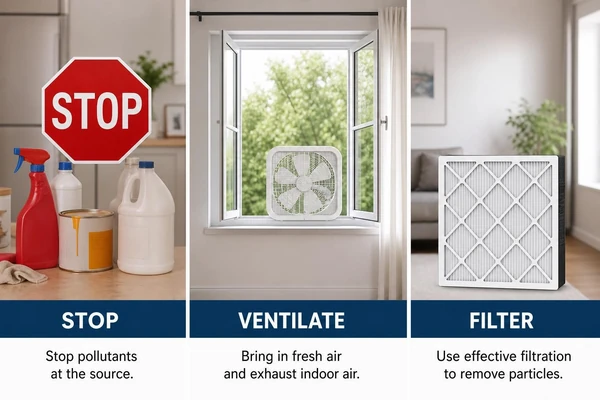
The foundation of good indoor air quality rests on three interconnected pillars:
- Source Control: Identifying and eliminating or reducing the emission of pollutants at their origin.
- Ventilation: Introducing fresh outdoor air and removing stale, polluted indoor air.
- Filtration: Using air purification systems to capture and remove airborne contaminants.
Understanding Indoor Air Quality and Its Health Impacts
Indoor Air Quality (IAQ) refers to the air quality within and around buildings, particularly as it relates to the health and comfort of occupants. Given that most Americans spend roughly 90% of their lives indoors, the quality of this air is paramount to overall well-being. Despite this, indoor air often harbors pollutant concentrations significantly higher than outdoor air. The U.S. Environmental Protection Agency (EPA) notes that indoor air can be 2 to 5 times more polluted than outdoor air, with some studies suggesting it can be up to 100 times worse under certain conditions.
This disparity is not just an inconvenience; it carries profound health implications. The World Health Organization (WHO) estimates that poor indoor air quality resulted in the loss of 86 million healthy life years in 2019 alone. This staggering figure underscores the urgent need to address indoor air pollution. As of June 2026, awareness is growing, but actionable steps are still widely needed to mitigate these risks.
To illustrate the potential differences, consider the typical comparison of indoor versus outdoor pollutant levels:
Pollutant Type Typical Indoor Concentration (Relative to Outdoor) Examples of Sources Particulate Matter Often higher, especially PM2.5 Cooking, smoking, candles, dust, pet dander, outdoor air infiltration Volatile Organic Compounds (VOCs) 2-10 times higher Cleaning products, paints, furnishings, building materials, air fresheners, personal care products Carbon Monoxide (CO) Can be significantly higher if sources present Unvented combustion appliances (gas stoves, furnaces), vehicle exhaust in attached garages Nitrogen Dioxide (NO2) Can be significantly higher if sources present Gas stoves, unvented kerosene/gas heaters, tobacco smoke Radon Variable, but concentrated indoors Natural breakdown of uranium in soil, rock, and water; enters homes through cracks in foundations Mold Spores Can be significantly higher if moisture present Leaks, high humidity, damp areas like bathrooms and basements Allergens Often higher Pet dander, dust mites, pollen (infiltrating from outdoors), cockroach droppings
Common Pollutants and Their Sources
Our indoor environments are complex ecosystems where numerous pollutants can originate from a variety of sources. Understanding these common culprits is the first step toward effective mitigation.
One pervasive category is Volatile Organic Compounds (VOCs). These are gases emitted from certain solids or liquids, and they can include a wide array of chemicals. Common indoor sources include paints, varnishes, wax, cleaning supplies, disinfectants, air fresheners, building materials, and furnishings. Even everyday items like dry-cleaned clothing, office equipment (copiers and printers), and craft materials can release VOCs. Formaldehyde, a specific type of VOC, is particularly common, found in pressed-wood products (like particleboard, plywood, and fiberboard), glues, and some insulation materials.
Secondhand smoke is another well-known indoor air pollutant, originating from burning tobacco products. Less recognized but equally concerning is thirdhand smoke, which consists of residual nicotine and other chemicals left on indoor surfaces by tobacco smoke. These residues can react with other common indoor pollutants to form new, toxic compounds, lingering on walls, furniture, and clothing long after a cigarette has been extinguished.
Combustion pollutants are byproducts of burning fuel. These include carbon monoxide, nitrogen dioxide, and particulate matter. Sources range from unvented or poorly vented gas stoves, ovens, and furnaces to fireplaces, wood stoves, and even candles. The World Health Organization (WHO) has highlighted the severity of this issue, estimating that cooking-related indoor air pollution causes 3.8 million annual deaths globally, with the Global Burden of Disease study estimating 1.6 million deaths in 2017 alone.
Biological agents represent a significant category of indoor pollutants. These include bacteria, viruses, pollen, and mold spores. They can originate from various sources:
- Pet dander: Microscopic flecks of skin shed by animals with fur or feathers.
- Mold spores: Thrive in damp, humid environments, often found near leaks, in bathrooms, basements, or poorly ventilated areas.
- Dust mites: Microscopic insects that feed on dead skin cells, thriving in bedding, upholstered furniture, and carpets.
- Pollen: Enters from outdoors through open windows, doors, or on clothing.
Other pollutants like lead (from old paint), asbestos (from older building materials), and pesticides (from home and garden use) also contribute to poor IAQ, each posing unique health risks.
How Indoor Air Quality Affects Health
The continuous exposure to these indoor pollutants can have a wide range of adverse health effects, from immediate discomfort to severe, long-term conditions.
Respiratory illness is one of the most direct consequences. Pollutants like particulate matter, mold spores, and secondhand smoke can irritate the airways, leading to coughing, sneezing, shortness of breath, and exacerbating conditions like asthma. For individuals with existing respiratory issues, poor IAQ can trigger severe attacks and significantly reduce lung function. Children, whose lungs are still developing, are particularly vulnerable, with prenatal household air pollution exposure linked to impaired lung function in infants and increased pneumonia risk.
Beyond the respiratory system, poor IAQ contributes to cardiovascular disease. Fine particulate matter (PM2.5) can penetrate deep into the lungs and enter the bloodstream, leading to inflammation and damage to blood vessels, increasing the risk of heart attacks and strokes.
Cognitive performance can also suffer. Studies have shown that elevated levels of indoor pollutants, particularly carbon dioxide (CO2) and certain VOCs, can impair decision-making, problem-solving, and overall cognitive function. This is especially concerning in schools and workplaces where sustained mental clarity is crucial.
Perhaps one of the most alarming long-term effects is an increased risk of lung cancer. Radon, a naturally occurring radioactive gas, is the leading cause of lung cancer among non-smokers and is responsible for 3-14% of cases in many countries, leading to tens of thousands of deaths annually. Secondhand smoke and asbestos exposure are also well-established causes of lung cancer and other serious conditions like mesothelioma.
Other health impacts include:
- Asthma triggers: Many common indoor pollutants, such as dust mites, pet dander, mold, and VOCs, are potent asthma triggers, leading to chronic inflammation and airway hyperresponsiveness.
- Sick Building Syndrome (SBS): A collection of non-specific symptoms (headaches, dizziness, nausea, eye/nose/throat irritation, fatigue) that affect occupants of a building but have no specific cause identified. Poor IAQ is often a contributing factor.
- Prenatal exposure risks: Exposure to pollutants during pregnancy can have lasting effects on fetal development, contributing to respiratory issues, developmental delays, and other health problems in children.
Addressing indoor air quality is not just about comfort; it’s a critical component of public health, impacting our physical and mental well-being across all stages of life.
Testing and Monitoring Your Home’s Air
Understanding what’s in your home’s air is the crucial next step after recognizing the importance of IAQ. Since many pollutants are invisible and odorless, testing and monitoring are essential. This allows us to identify specific problems, track trends, and verify the effectiveness of improvement strategies. Whether you opt for do-it-yourself kits or professional assessments, gaining insight into your home’s air composition empowers you to take targeted action.
Home test kits offer a convenient starting point for detecting certain pollutants, while professional testing provides a more comprehensive and accurate analysis. For continuous awareness, real-time air quality monitors are becoming increasingly popular, offering ongoing data on various parameters. When using any monitoring device, proper sensor calibration is key to accurate readings. It’s also important to focus on trend analysis over time rather than isolated spikes, as this provides a more realistic picture of your home’s air quality patterns.
Methods to Monitor Indoor Air Quality
Monitoring indoor air quality can range from simple, single-pollutant detectors to sophisticated, multi-sensor systems. The method you choose often depends on your concerns and budget.
Real-time monitors are increasingly popular, offering continuous data on various indoor air parameters. These devices typically use sensors to detect pollutants and display readings on a screen or via a smartphone app. They can be invaluable for understanding how daily activities (like cooking or cleaning) impact your air quality.
Key sensors found in these monitors include:
- PM2.5 sensors: These detect fine particulate matter, which is a major concern for respiratory and cardiovascular health. They measure microscopic particles that can be inhaled deep into the lungs.
- CO2 tracking: Carbon dioxide levels are a good indicator of ventilation effectiveness. High CO2 levels often correlate with poor ventilation, which can lead to a buildup of other pollutants and affect cognitive function.
- VOC detection: Sensors for Volatile Organic Compounds identify a broad range of chemical gases. While they may not identify specific chemicals, they indicate the overall presence of these potentially harmful compounds.
When considering comprehensive HVAC solutions that support better indoor air quality, it’s beneficial to consult with experts who can assess your specific needs and recommend appropriate systems. For insights into various HVAC solutions that contribute to a healthier home environment, exploring resources like iRepair HVAC indoor air quality can provide valuable information on how different systems can enhance your IAQ.
For specific pollutants like mold, visual inspection and specialized test kits can help identify growth. Professional testing involves collecting air or surface samples for laboratory analysis, providing definitive identification of mold types and concentrations.
Understanding Radon and Carbon Monoxide Risks
Among the many indoor air pollutants, radon and carbon monoxide pose unique and severe risks due to their invisible and odorless nature, making detection impossible without specialized equipment.
Radon gas is a naturally occurring radioactive gas that results from the breakdown of uranium in soil, rock, and water. It can enter homes through cracks in foundations, crawl spaces, and other openings. Radon is the leading cause of lung cancer among non-smokers, responsible for an estimated 3-14% of lung cancer cases in many countries, leading to tens of thousands of deaths annually. The EPA recommends that all homes be tested for radon, regardless of age or location. Continuous radon monitors or short-term test kits are readily available. If levels are high (above 4 pCi/L or 100 Bq/m³ as per WHO guidelines), mitigation systems are necessary to prevent soil gas entry and vent the gas safely outdoors.
Carbon monoxide (CO) is another silent killer. It’s an odorless, colorless gas produced by the incomplete combustion of fuels. Sources include unvented kerosene and gas space heaters, leaking chimneys and furnaces, gas stoves, and vehicle exhaust from attached garages. CO poisoning can cause headaches, dizziness, nausea, and in severe cases, unconsciousness and death. Installing CO detectors on every level of your home, especially near sleeping areas, is crucial. Ensuring that combustion appliances are properly installed and maintained, and using direct-vent appliances that draw combustion air from outdoors and vent exhaust directly outside, significantly reduces CO risks. Regular professional inspections of furnaces, water heaters, and other fuel-burning appliances are also vital.
Because these gases present such serious, undetectable threats, proactive testing and appropriate detector installation are non-negotiable aspects of maintaining a safe indoor environment.
Practical Steps to Improve IAQ and HVAC Efficiency
Improving indoor air quality is a multi-faceted endeavor that directly correlates with the efficiency and maintenance of your home’s HVAC system. By implementing practical strategies focused on source control, mechanical ventilation, and effective filtration, we can create a healthier living space while simultaneously enhancing energy efficiency and extending system longevity. It’s a holistic approach where each component supports the others, leading to a more comfortable and safer home environment.
Source Control and Ventilation Strategies
The most effective approach to improving indoor air quality is source control – identifying and eliminating or reducing the emission of pollutants at their origin. If a pollutant isn’t present or its emission is minimized, it can’t harm your air.
Key source control measures include:
- Choosing low-VOC products: When painting, buying new furniture, or using cleaning supplies, opt for products labeled “low-VOC” or “no-VOC” to significantly reduce chemical off-gassing.
- Eliminating smoking indoors: This is critical for preventing secondhand and thirdhand smoke pollution.
- Proper maintenance of combustion appliances: Regularly inspect and service gas stoves, furnaces, and water heaters to ensure they burn fuel efficiently and vent exhaust properly.
- Reducing allergens: Regularly clean to minimize dust, vacuum with HEPA filters, and wash bedding frequently to control dust mites and pet dander.
- Addressing moisture issues promptly: Fix leaks immediately to prevent mold growth.
Ventilation strategies are equally vital, as they dilute existing pollutants and bring in fresh outdoor air.
- Natural ventilation: Simply opening windows and doors when outdoor air quality is good can significantly improve indoor air circulation. Cross-ventilation, where air flows through opposing openings, is particularly effective.
- Exhaust fans: Use kitchen and bathroom exhaust fans that vent outdoors to remove moisture, cooking fumes, and odors. Ensure these fans are clean and functional.
- Mechanical ventilation systems:Heat Recovery Ventilators (HRVs) and Energy Recovery Ventilators (ERVs): These systems are particularly valuable in colder climates like the Twin Cities. They continuously bring in fresh outdoor air while exhausting stale indoor air, transferring heat (and sometimes humidity) between the two airstreams. This minimizes energy loss, making them an energy-efficient way to maintain good ventilation, especially in newer, tightly sealed homes.
- Demand-controlled ventilation: These systems use sensors (often CO2 sensors) to automatically adjust ventilation rates based on occupancy or pollutant levels, ensuring adequate fresh air without over-ventilating and wasting energy.
By combining diligent source control with effective ventilation, we can dramatically reduce the concentration of harmful pollutants in our homes.
Filtration, Duct Maintenance, and Humidity Control
Beyond controlling sources and ventilating, effective filtration, diligent duct maintenance, and precise humidity control are critical for comprehensive indoor air quality management.
Filtration plays a vital role in capturing airborne particles that source control and ventilation might miss.
- HEPA filters: High-Efficiency Particulate Air (HEPA) filters are renowned for their ability to capture 99.97% of airborne particles 0.3 microns in size, including dust, pollen, mold spores, and pet dander. They are often found in high-quality air purifiers and some HVAC systems.
- Air purifiers: Portable or whole-home air purifiers equipped with HEPA filters and activated carbon filters can effectively remove particulate matter, allergens, and some gaseous pollutants like VOCs and odors.
Air duct cleaning is a key component of maintaining a healthy HVAC system and improving IAQ. Over time, dust, allergens, pet dander, and even mold can accumulate within your home’s ductwork. When the HVAC system runs, these contaminants are circulated throughout your living spaces. Regular professional air duct cleaning removes these buildups, leading to:
- Reduced circulation of allergens and pollutants.
- Improved HVAC system efficiency, as airflow is less obstructed.
- A cleaner overall indoor environment.
Similarly, A/C coil cleaning is essential. The evaporator coil in your air conditioner can become a breeding ground for mold and bacteria if it gets dirty or remains damp. Cleaning these coils not only prevents the growth of biological contaminants but also ensures your A/C operates at peak efficiency.
Maintaining optimal relative humidity is another cornerstone of good IAQ. Ideally, indoor humidity should be kept between 40% and 60%.
- High humidity (above 60%): Promotes the growth of mold, dust mites, and bacteria. It can also make the air feel heavier and less comfortable. Dehumidifiers can help manage excessive moisture, especially in basements or during humid seasons.
- Low humidity (below 30%): Can lead to dry skin, irritated respiratory passages, and static electricity. Humidifiers can add moisture to the air during dry winter months.
Proper humidity control is particularly important for mold prevention. Mold thrives in damp conditions, and once established, it can be difficult to remove and can release spores that cause respiratory issues. Fixing leaks promptly, ensuring adequate ventilation in bathrooms and kitchens, and using dehumidifiers are crucial steps.
For homes utilizing specialized systems like mini-splits, understanding how these units contribute to and maintain air quality is vital. Many modern mini-split systems offer advanced filtration options and can be highly effective in localized temperature and air quality control. If you’re in the Eden Prairie area and looking for tailored solutions, exploring options for Mini split indoor air quality Eden Prairie can provide specific insights into how these systems can integrate with your overall IAQ strategy.
By combining robust filtration, regular duct maintenance, and careful humidity management, we can build a strong defense against indoor air pollutants and ensure our HVAC systems operate effectively and efficiently.
Frequently Asked Questions About Home Air Quality
Many homeowners have similar questions when it comes to the air they breathe indoors. Addressing these common concerns provides actionable advice and clarifies misconceptions, helping everyone take better control of their home’s air quality.
How does indoor air compare to outdoor air?
This is a critical question, and the answer often surprises people. As we’ve discussed, indoor air can be significantly more polluted than outdoor air. While outdoor air quality is certainly a concern, especially in urban or industrial areas, the concentrations of many pollutants indoors are typically 2 to 5 times higher than outdoors. In some scenarios, particularly in homes with strong pollutant sources and poor ventilation, indoor air can be up to 100 times more polluted.
The main reason for this disparity is the lack of natural dispersion. Outdoors, pollutants are diluted and dispersed by wind and open space. Indoors, however, pollutants become trapped within enclosed environments, leading to their accumulation. Sources like cleaning products, building materials, cooking, and even our own activities (like shedding skin cells) continuously release contaminants into a confined space, allowing them to reach much higher concentrations.
What are the acceptable standards for indoor air?
Unlike outdoor air, which is regulated by federal agencies like the EPA, there are generally no legally binding federal acceptable standards for indoor air quality for residential buildings in the U.S. However, various organizations provide WHO guidelines and EPA recommendations that serve as benchmarks for healthy indoor environments.
Key guidelines and recommendations include:
- Carbon Dioxide (CO2) thresholds: While not a direct pollutant in typical indoor concentrations, CO2 levels are a strong indicator of ventilation. Levels below 800-1000 parts per million (ppm) generally indicate good ventilation. Above 1000 ppm, cognitive performance can be affected, and it suggests other pollutants may also be accumulating.
- Radon action levels: The EPA recommends taking action to mitigate radon if levels are 4 picocuries per liter (pCi/L) or higher. The WHO suggests an even lower reference level of 100 Bq/m³ (approximately 2.7 pCi/L).
- Relative humidity targets: Most experts recommend maintaining indoor relative humidity between 40% and 60% to inhibit mold growth and dust mites while preventing overly dry conditions.
- Particulate Matter (PM2.5): While no specific indoor standard exists, outdoor air quality standards for PM2.5 (e.g., 12 µg/m³ annual average by EPA) are often used as a reference point for indoor air.
- VOCs and Formaldehyde: Guidelines exist for specific VOCs, often based on health risk assessments. For formaldehyde, for instance, the WHO recommends a guideline value of 0.1 mg/m³ (0.08 ppm) for a 30-minute average to avoid sensory irritation.
These guidelines are not regulatory but provide valuable targets for homeowners aiming to optimize their indoor air quality for health and comfort.
How do heating and cooking affect indoor pollutants?
Heating and cooking are two of the most significant contributors to indoor air pollution, often without us realizing it.
Cooking, especially with gas stoves, can release a variety of pollutants:
- Nitrogen dioxide (NO2): Gas stoves produce NO2, which can irritate the respiratory tract and exacerbate asthma.
- Carbon monoxide (CO): Incomplete combustion from gas stoves can produce CO, particularly if ventilation is poor.
- Particulate matter (PM): Frying, grilling, and even boiling can release fine particulate matter into the air. Studies have shown that cooking Thanksgiving dinner, for example, can produce particulate matter exceeding 300 μg/m³, far surpassing outdoor air quality standards. The WHO estimates that cooking-related indoor air pollution causes 3.8 million annual deaths globally, highlighting the severity of this issue, with 1.6 million deaths reported in 2017.
- Benzene: Cooking with natural gas has been linked to elevated benzene levels in homes, a known carcinogen.
To mitigate cooking-related pollution, always use exhaust fans that vent outdoors, and consider opening windows.
Heating systems can also impact IAQ:
- Gas and oil furnaces: If not properly maintained or vented, these can leak CO, NO2, and other combustion byproducts into the home. Regular professional inspections are crucial.
- Wood fires and wood stoves: These are significant sources of particulate matter, CO, and VOCs. While cozy, they should be used with proper ventilation and well-maintained chimneys to minimize indoor pollution.
- Kerosene and unvented gas heaters: These are particularly problematic as they release combustion products directly into the living space and should be used with extreme caution and only in well-ventilated areas, or ideally avoided indoors altogether.
Understanding these impacts allows us to make informed choices about appliance use, maintenance, and ventilation, directly contributing to a healthier home environment.
Conclusion
The air we breathe indoors is fundamental to our health, comfort, and overall quality of life. As we’ve explored, indoor air can harbor a complex mix of pollutants, often at concentrations far exceeding outdoor levels, with significant implications for our respiratory health, cardiovascular system, and even cognitive function. From the insidious risks of radon and carbon monoxide to the everyday emissions from cooking, cleaning, and building materials, maintaining good Indoor Air Quality (IAQ) is an ongoing responsibility.
Fortunately, addressing IAQ is not an insurmountable challenge. By embracing a proactive approach centered on the three pillars of source control, ventilation, and filtration, we can significantly improve our indoor environments. This includes:
- Identifying and minimizing pollutant sources: Choosing low-VOC products, eliminating indoor smoking, and properly maintaining combustion appliances.
- Ensuring adequate ventilation: Utilizing natural airflow, exhaust fans, and advanced mechanical systems like HRVs/ERVs.
- Implementing effective filtration: Employing HEPA filters and air purifiers, alongside regular air duct and A/C coil cleaning.
- Monitoring and managing humidity: Keeping indoor humidity between 40-60% to deter mold and dust mites.
- Testing for hidden threats: Regularly checking for radon and installing carbon monoxide detectors.
By integrating these practical steps into our home maintenance routines, we not only protect our long-term health but also enhance the efficiency and longevity of our HVAC systems. Investing in clean indoor air is an investment in our well-being, ensuring that our homes remain sanctuaries of health and comfort for years to come.
