
In Chicagoland, pet safety isn’t just a nice-to-have, it’s a daily priority. Busy streets, tight city lots, curious pups, and four-season weather make dog fence installation a nuanced decision. Homeowners want solutions that keep pets secure without turning the yard into a fortress. That’s where local expertise from Dog Fence Installers Chicagoland pays off, balancing durability, code compliance, and curb appeal. This guide compares chain link, wood, and invisible fencing, and breaks down how each fits urban and suburban settings, what it costs, and how to maintain it. The goal is simple: find a fence that works for the pet, the property, and the neighborhood.
Safety priorities driving pet fencing choices in Chicagoland
Chicago and its suburbs come with their own unique set of safety concerns. High traffic density and alley access can increase escape risks, while neighborhood foot traffic, nearby parks, and even wildlife—including coyotes in some suburbs—add potential distractions.
On small city lots, shared property lines and close proximity to children or pets mean that reliable containment and good-neighbor aesthetics matter just as much as durability.
For guidance on choosing safe, attractive fencing solutions for Chicago-area homes, Click here.
Key safety drivers include:
- Temperament and drive: Diggers, jumpers, and prey-driven breeds need higher, sturdier barriers or supplemental deterrents.
- Visibility: In corners or along alleys, sightlines help owners track pets and prevent surprises.
- Seasonal durability: Freeze–thaw cycles can heave posts: snow banks give jumpers extra lift: summer landscaping crews can nick underground wires.
- Compliance and access: Many suburbs limit front-yard fence heights and require clearances near sidewalks or easements. Gates should self-close and latch.
For most households, the safest solution is one that combines layout-aware design with materials and features matched to the dog’s behavior.
Comparing chain link, wood, and invisible fence systems
Each option offers a different mix of security, aesthetics, and cost. The right choice often blends two or more solutions across the property.
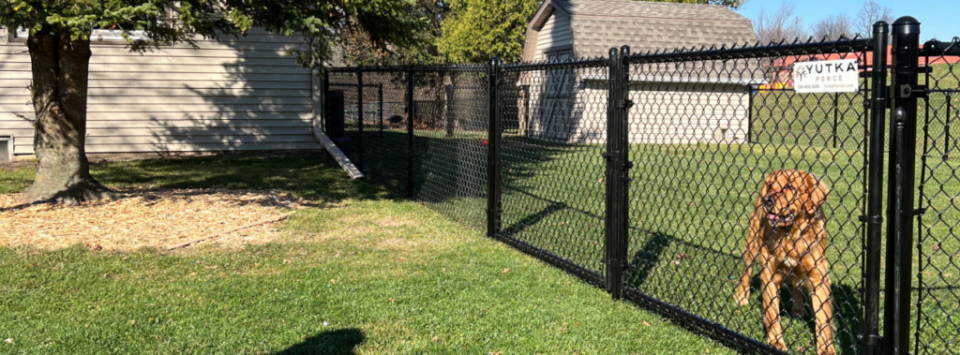
Chain link
Pros
- Strong, affordable, fast to install: great for side yards and alleys.
- Visibility for supervision and airflow: vinyl-coated versions reduce glare and rust.
- Easy to add height (top rail, taller fabric) and dig deterrents.
Cons
- Lower privacy and less “finished” curb appeal unless softened with plantings or slats.
- Not coyote-proof without upgrades (height, rollers) and not ideal for stealthy escape artists who climb.
Best fit: Working or active dogs, utility areas, or when budget and durability lead.
Wood (privacy or picket)
Pros
- Warm, classic look: excellent privacy and wind breaks.
- Customizable heights and styles: can match house trim for cohesion.
Cons
- Requires sealing/staining: boards can warp or gap over time.
- Heavier upfront cost than basic chain link.
Best fit: Backyards where aesthetics and privacy matter: sound damping near busy streets.
Invisible (underground) fencing
Pros
- Preserves views and landscaping: ideal for complex layouts or HOA restrictions.
- Typically lower upfront cost than long runs of wood or ornamental metal.
Cons
- Doesn’t keep other animals or people out.
- Requires consistent training and collar upkeep: wire breaks can interrupt service.
Best fit: Open yards, HOA-limited neighborhoods, or when owners want minimal visual impact, paired with training support from Dog Fence Installers Chicagoland.
How invisible fencing works for urban and suburban yards
Invisible fencing creates a virtual boundary using a transmitter, a buried perimeter wire, and a receiver collar. As a dog nears the boundary, the collar emits a tone, then a vibration or adjustable static correction if the dog moves closer. Installers mark the boundary with flags and guide owners through 1–2 weeks of positive reinforcement training so the dog learns the “back away” cue.
In city lots, invisible fencing can carve out safe zones around patios, garden beds, or front stoops without obstructing sightlines. In the suburbs, it scales to larger properties or irregular footprints around trees, sheds, or pools. Multi-dog households can tune collar levels individually.
Key considerations: It won’t stop an off-leash dog or wildlife from entering. Battery checks, surge protection, and careful lawn work (aeration, edging) reduce outages. For anxious or highly prey-driven dogs, pros may recommend pairing invisible boundaries with physical barriers at high-distraction edges.
Design considerations for keeping pets safe and yards attractive
Great containment can still look great from the street. The trick is balancing line-of-sight, materials, and transitions.
- Mix-and-match strategy: Use wood privacy along the back for quiet and shelter: choose black vinyl-coated chain link on side yards for a lighter profile and visibility to alleys: consider ornamental aluminum in front if allowed.
- Height and sightlines: Six feet is common for backyards: front yards often cap at 3–4 feet. Taller sections where dogs get the zoomies cut down on leaps.
- Dig deterrence: Bury an L-footer of wire mesh along the inside bottom, add gravel footing, or pour a narrow mow strip where diggers fixate.
- Gate planning: Place gates on level ground with self-closing hinges, child-safe latches, and space for strollers or lawn equipment. Double-gate “airlocks” help with door-dashers.
- Green softening: Layer ornamental grasses, hydrangeas, or evergreen shrubs to blur long planes of fence, reduce wind, and keep a neighbor-friendly look.
- Codes and utilities: Observe setbacks and height rules: always call 811 before digging to mark gas, electric, and fiber lines, especially in dense neighborhoods.
Cost factors that influence dog fence installation decisions
Budgets hinge on materials, length, terrain, and local rules. Ballpark figures in the region vary, but these ranges help frame decisions:
- Chain link: Roughly $15–$35 per linear foot installed, depending on height (4–6 ft), gauge, and vinyl coating. Corners, slopes, and gates increase labor.
- Wood (cedar or treated): About $25–$60 per linear foot, with style (privacy vs. shadowbox), post type, and finish driving price. Cedar looks great but needs upkeep.
- Invisible fence: Commonly $1,000–$2,500 for typical yards, more for large or complex layouts: extra collars and surge protection add modestly.
- Add-ons: Gates ($150–$600+ each), dig deterrents, coyote rollers, and decorative caps. Removal of an old fence, root/rock obstructions, and hauling fees can shift totals.
- Permits/HOA: Some municipalities require permits or inspections, and many suburbs limit front-yard heights. Expect modest permit costs and allow time for approvals.
Installers also plan for Chicagoland’s frost depth by setting posts deeper and using proper concrete footings, which improves longevity, and slightly affects labor costs.
Maintenance practices for long-lasting enclosures
A little seasonal care goes a long way in the Midwest.
- Wood: Seal or stain every 2–3 years: replace split boards and check soil contact at picket bottoms. Keep sprinklers off the fence line to minimize rot.
- Chain link: Rinse road salt in late winter: touch up scratches on coated systems: tighten loose ties and check top rails after storms.
- Vinyl/ornamental: Wash grime, inspect fasteners, and clear vines that can pry apart panels.
- Gates: Lubricate hinges, adjust latches as the ground shifts with freeze–thaw, and confirm self-close function.
- Invisible fence: Test collar weekly: replace batteries per manufacturer guidance: note any boundary wire alarms: flag and repair nicks after aeration or edging.
Pro tip: Walk the perimeter at the first big thaw each spring. If posts have heaved, Dog Fence Installers Chicagoland can reset or reinforce them before summer activity ramps up.
